
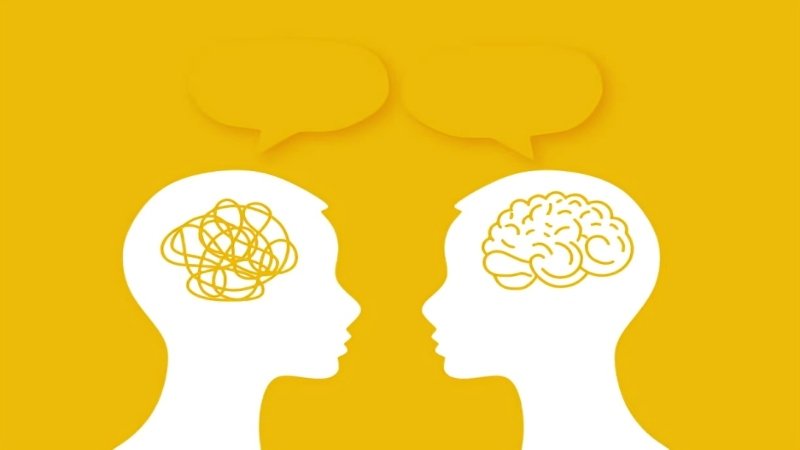
The human brain is often compared to a sponge, but that comparison doesn’t quite capture the frantic, electric activity happening inside an infant’s head. From the moment a child is born, their brain is wiring itself at an astonishing rate, forming over a million new neural connections every single second. While nutrition and sleep are vital for this growth, there is another fuel that is just as critical: language.
The Science of Neural Architecture
To understand why early language exposure is so potent, we have to look at how the brain develops. The first few years of life are known as a “critical period” for brain development. During this window, the brain is uniquely plastic, meaning it is incredibly adaptable and eager to learn.
Building Synaptic Highways
Every time an infant hears a word, a rhyme, or a song, specific neurons in the auditory cortex spark. When these experiences are repeated, the connections between these neurons—called synapses—become stronger. Think of it like walking through a field of tall grass. The first time you walk through, you leave a faint trail. But if you walk that same path every day, it becomes a clear, paved highway.
Language exposure builds these highways. When a child lives in a language-rich environment, their brain constructs robust networks for processing sound, meaning, and syntax.
The “Use It or Lose It” Principle
The brain is also an efficient editor. As children grow, the brain engages in a process called synaptic pruning. It eliminates weaker connections that aren’t being used to make room for more important ones. If a child isn’t exposed to language—or specific sounds within a language—those neural pathways may wither away. This is why adults struggle to hear the nuances of a foreign language that a toddler can pick up effortlessly. The toddler’s brain is still open to all sounds; the adult’s brain has already “pruned” the ability to distinguish them.
Beyond Vocabulary: The Cognitive Ripple Effect
While a large vocabulary is the most obvious benefit of hearing more words, the impact of language goes much deeper. It influences “executive function,” the set of mental skills that include working memory, flexible thinking, and self-control.
Literacy and Academic Success
There is a direct correlation between the amount of language a child hears at home and their future reading ability. Children who are bathed in language tend to decode words faster and understand complex sentence structures earlier. This gives them a significant head start when they enter school, often predicting academic success well into their teenage years.
Cognitive Flexibility
Language teaches the brain to categorize and conceptualize. When a child learns that a “dog” can be a poodle, a beagle, or a cartoon drawing, they are practicing cognitive flexibility. They are learning to group different things under one label. This mental gymnastics strengthens the brain’s ability to switch tasks and adapt to new information.
Problem-Solving and Logic
Language provides the framework for internal thought. As children acquire language, they begin to engage in “private speech”—talking to themselves as they play. This isn’t just noise; it is the child guiding their own actions. “The block is too big, try the small one.” This internalization of language is the foundation of logic, planning, and complex problem-solving.
Language in Action
The theory of cognitive development comes alive when we look at how different environments impact children. While we won’t look at specific medical records, developmental psychologists have observed consistent patterns in how language exposure manifests in real life.
The Impact of “Serve and Return”
Consider two different home environments. In the first, a caregiver silently feeds a baby. In the second, the caregiver engages in “serve and return” interactions. The baby coos (the serve), and the caregiver responds (the return), saying, “Oh, are you hungry? Let’s get some food.”
Studies consistently show that children in the second environment develop stronger social and cognitive skills. They learn cause and effect—that their voice impacts the world. This builds confidence and curiosity, driving them to explore and learn more aggressively than their peers who receive less verbal interaction.
The Bilingual Advantage
Exposure to multiple languages offers a unique cognitive boost. Children raised in bilingual homes, or those who attend a Spanish immersion school, like those in San Antonio, or a similar language program, often outperform monolingual peers in tasks requiring attention management. Because their brains must constantly inhibit one language to speak the other, they develop a robust “executive control” system. This mental workout results in better focus and an enhanced ability to tune out distractions in noisy classrooms.
Creating a Language-Rich Environment
You don’t need a degree in linguistics to boost a child’s brain development. The most effective strategies are simple, free, and can be woven into the fabric of daily life.
Narrate Your Day
Treat your life like a documentary. Narrate what you are doing, seeing, and feeling. “I am opening the fridge. Look, here is the cold milk. Now I am pouring it into the blue cup.” It might feel silly to talk to a newborn about groceries, but this constant stream of words introduces them to sentence structure and vocabulary in context.
Read Together (Interactively)
Reading aloud is non-negotiable, but how you read matters. Instead of just reading the text, engage the child. Ask questions, even if they can’t answer yet. “Where is the cat? Do you see the red balloon?” As they get older, ask open-ended questions like, “What do you think will happen next?” This pushes them to use language to predict and reason.
Follow Their Lead
If a child points to a truck, don’t just say “Yes.” Elaborate. “Yes, that is a big, red fire truck. It goes fast! Vroom!” This technique, known as “expansion,” validates the child’s interest while adding new information and grammar to their mental library.
Prioritize Face-to-Face Interaction
While educational apps claim to teach language, research suggests that babies do not learn language effectively from screens. They need the social context—the eye contact, the facial expressions, and the responsiveness—of a human being. Turn off the tablet and talk.
Conclusion
The investment we make in early language exposure yields dividends that last a lifetime. Every story read at bedtime, every song sung in the car, and every question asked at the dinner table is contributing to the complex neural wiring of a child’s brain.
