
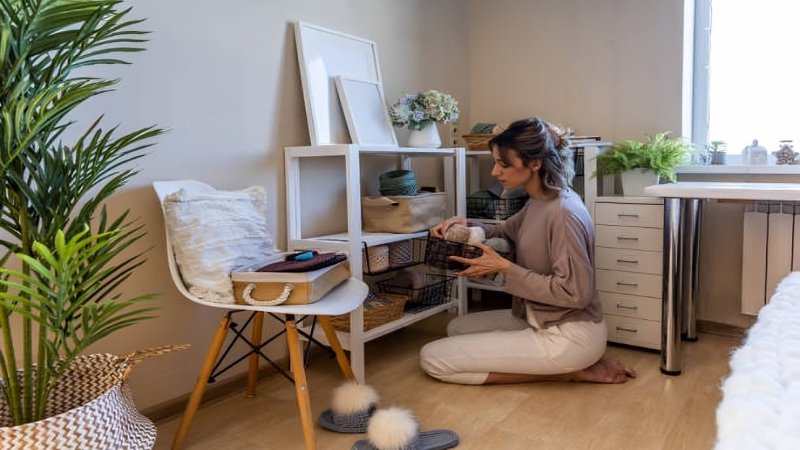
When most people hear the term “self-care,” their minds drift toward bubble baths, expensive skincare routines, or perhaps a glass of wine on a Friday night. We have been conditioned to view self-care as an indulgence—a temporary escape from the rigors of daily life. While these moments of relaxation are valuable, they often treat the symptoms of stress rather than the source.
The Link Between Clutter and Cortisol
Have you ever walked into a room piled high with laundry or covered in scattered papers and felt your chest tighten? That reaction is physiological. Research suggests a direct link between the amount of clutter in a home and the cortisol levels of its inhabitants.
Clutter bombards our minds with excessive stimuli. Every misplaced item is a visual cue that signals “work to be done.” Your brain interprets this visual noise as unfinished business, which prevents you from fully relaxing. You might be sitting on the couch trying to watch a movie, but your peripheral vision is picking up the mess on the coffee table, keeping your brain in a low-grade state of fight-or-flight.
By removing this visual noise, you allow your nervous system to downregulate. An organized room signals safety and order to the brain. It tells you that everything is under control, allowing you to truly rest. In this way, spending twenty minutes organizing your living area can be more effective for stress reduction than a twenty-minute meditation session.
Mental Health Benefits of an Organized Home
Beyond the immediate reduction of stress hormones, maintaining an organized home offers profound long-term mental health benefits. It changes how you interact with your day and how you view yourself.
Reducing Decision Fatigue
We make thousands of decisions every day, from what to eat to how to respond to an email. This leads to decision fatigue, a state where our willpower and reasoning abilities deplete as the day goes on. Searching for lost keys or deciding where to shove a new purchase adds unnecessary friction to your life. Organization automates these small moments. When everything has a place, you stop thinking and start flowing.
A Sense of Control
Life is unpredictable. We cannot control the economy, the traffic, or the weather. However, we can control the state of our linen closet. Organizing provides a tangible sense of agency. When the world feels overwhelming, bringing order to a small corner of your home offers a dopamine hit of accomplishment. It is a physical manifestation of your ability to manage your life.
Improved Sleep Hygiene
Your bedroom should be a sanctuary, not a storage unit. Sleeping in a cluttered room can lead to sleep disturbances and difficulty falling asleep. The psychological reminder of “unfinished tasks” (the pile of clothes on the chair) can keep your mind active when it should be winding down. A clear surface leads to a clear mind, facilitating deeper, more restorative rest.
Practical Tips for Mindful Organization
Transforming your home into a sanctuary doesn’t require a weekend-long marathon or a degree in interior design. It starts with small, intentional shifts in how you manage your belongings.
Start with the “One Touch” Rule
Procrastination creates clutter. The “One Touch” rule is simple: if you pick something up, put it away immediately, rather than putting it down on a random surface. If you take off your coat, hang it up. If you open the mail, recycle the envelope instantly. This prevents the slow accumulation of mess that eventually becomes overwhelming.
Invest in Systems, Not Just Storage
Buying bins doesn’t solve the problem if you don’t have a system. Group items by category and frequency of use. Keep daily essentials at eye level and seasonal items higher up. For those looking to maximize efficiency in the bedroom, a custom closet design in Salt Lake City can be transformative. Tailoring your storage space to your specific wardrobe means you spend less time fighting with hangers and more time starting your day with ease.
The 15-Minute Reset
Set a timer for 15 minutes every evening to reset your main living areas. Fluff the pillows, fold the blankets, and load the dishwasher. Waking up to a clean kitchen and a tidy living room sets a positive tone for the entire day. It is a gift you give to your morning self.
Digitize Paper Clutter
Paper is often the biggest culprit in a messy home. Manuals, receipts, and old bills take up valuable physical and mental space. Switch to digital statements wherever possible. For necessary physical documents, create a single “active” file for items needing attention and file the rest immediately.
Maintaining the Habit
The goal of organization as self-care isn’t perfection; it’s functionality. Homes are meant to be lived in, and they will get messy. The key is to build habits that make the recovery process easy.
Shift your mindset from “cleaning is a chore” to “organizing is a reset.” When you view the activity as a way to care for your mental health, resistance fades. Be realistic about your standards. A home can be clean and organized without looking like a sterile catalog photo.
Regularly edit your belongings. We often hold onto items out of guilt or the fear that we might need them “someday.” However, letting go of items that no longer serve you creates space for the things that do. Adopting a “one in, one out” policy helps maintain equilibrium—if you buy a new pair of shoes, donate an old pair.
Conclusion
Organization is not about impressing guests or meeting rigid standards. It’s about creating an environment that supports your life. Clearing clutter clears the path for better focus, relaxation, and peace. Start small—choose one drawer or corner today. In a noisy world, an organized home is the ultimate retreat.
