
Headquartered in Dallas, Texas, Car Crash Report Org provides no-cost accident documentation and educational resources designed to help vehicle accident victims and their families pursue fair outcomes. Drawing information from trusted sources such as police departments, first responders, traffic databases, and state motor vehicle agencies, the organization offers secure, downloadable reports covering incidents across all 50 states.
In addition to supplying objective records that can support insurance and legal claims, Car Crash Report Org publishes safety and legal insights through The Crash Reporter, helping readers better understand accident trends, liability considerations, and post-accident procedures. The organization also works alongside attorneys, safety advocates, and community groups to promote public awareness and support individuals navigating the aftermath of serious vehicle collisions.
Car Crash Report Org – How Car Accident Types Influence Liability
Car Crash Report Org has advocated for the rights and safety of car accident victims in the United States since 2003. As part of the organization’s mission to assist accident victims and their families in the aftermath of car accidents, Car Crash Report Org (carcrashreport.org) provides drivers with a depth of safety and legal information, including data-driven insights into different types of car accidents and how they impact liability processes.
In the immediate aftermath of a car accident, drivers, passengers, and other involved parties typically want to know one thing: who is at fault. Law officers, insurance agents, and court officials work together to determine fault through many different processes. During these processes, investigators classify the type of car accident, which often provides critical insights into determining fault.
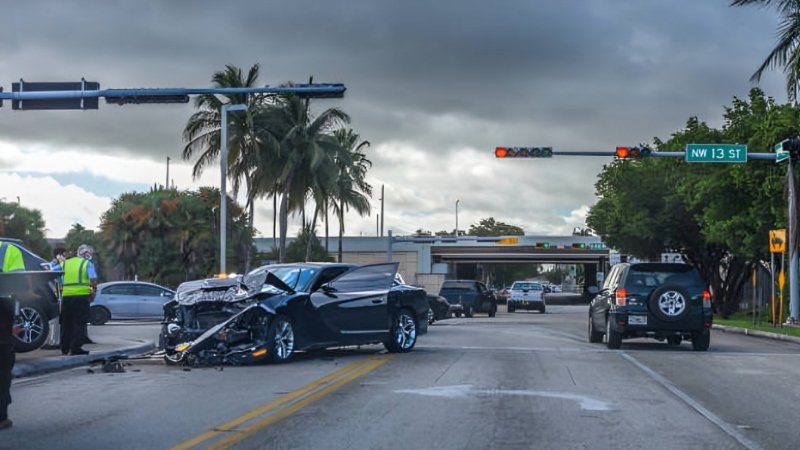
A head-on collision, for example, often represents the most severe type of vehicle accident. In these crashes, at least two vehicles drive directly into one another, colliding their front bumpers. Head-on collisions often involve a major traffic law violation, such as one driver illegally leaving their lane. As an extreme example, imagine a motorist driving against traffic on the wrong side of a highway.
In addition to crossing a center line or median, a driver will typically assume fault for a head-on collision if they drive the wrong way down a one-way street or enter a freeway on-ramp going in the wrong direction. That said, multiple drivers can share blame for head-on collisions. If a driver was speeding, for instance, they might only be entitled to reduced compensation following the accident.
A rear-end collision, on the other hand, involves one driver impacting another vehicle’s rear bumper with their front bumper. State laws generally assume that the motorist who rear-ends the other driver is at fault for the accident, especially if the other driver was stationary at the time of impact. It is usually difficult to prove otherwise, because basic driving laws mandate that drivers always maintain a safe following distance from other motorists. That said, a driver who stops short or engages in brake-checking behavior may share some or all of the fault for a rear-end collision. Other actions that might influence fault include driving with non-functioning brake lights or a driver reversing unexpectedly into a vehicle behind them.
Also known as T-bone crashes, side-impact crashes frequently occur at intersections. These represent some of the most challenging accidents when it comes to determining fault, as investigators must ascertain which driver had the right of way. Lacking traffic camera footage, this information is not always obvious. That said, the fault in side-impact crashes generally falls on a driver who ran a red light or stop sign, failed to yield while turning left, or otherwise violated right-of-way laws.
Chain reaction crashes are even more complex. As the name implies, chain reaction crashes are accidents that involve multiple vehicles, usually caused by an initial collision that forces other drivers to make sudden and technically illegal decisions to avoid further damage. For example, if one car rear-ends another, a driver further up the road may need to swerve into oncoming traffic to avoid driving into the two rear-ended cars. If that driver subsequently causes a head-on collision, they may refute blame for the impact, claiming they had no other choice.
In these cases, insurance investigators rely on the aid of accident reconstruction experts to analyze all available data. Usually, multiple drivers come away from chain reaction crashes bearing some level of responsibility.
About Car Crash Report Org
Car Crash Report Org is a Dallas-based organization that provides free, secure accident reports and educational resources for vehicle accident victims and their families. Using information gathered from police departments, traffic databases, first responders, and state agencies, the organization delivers accessible documentation intended to support insurance and legal claims. Through the Crash Reporter and collaborations with safety advocates and legal professionals, it also shares information about accident law, liability trends, and public road safety awareness.
