
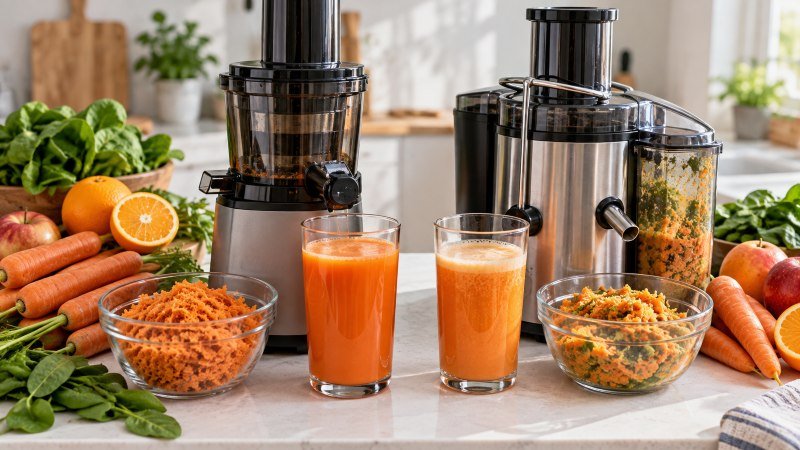
Here’s something nobody talks about in juicer reviews. Take the pulp out after juicing carrots. Squeeze it with your hand. If you’re using a centrifugal juicer, juice drips out. Sometimes enough to fill a shot glass. That’s juice your machine left behind.
Now do the same thing with a cold press juicer machine. The pulp comes out dry. Crumbly. Almost powdery. First time you see it, you might think something broke inside the machine. Nothing’s broken. It just got more out of the carrot than the other juicer could.
So How Big Is the Difference, Actually?
That depends on what you’re putting through the machine. Oranges and watermelon? Both juicer types do a decent job because those fruits are already mostly water. A cold press juicer pulls maybe 15 to 20% more from citrus. You’d barely notice at breakfast.
Leafy greens? Totally different story. We’ll get to that.
First, the numbers. These come from food science studies and hands-on juicer testing, not marketing brochures.
| Produce | Cold Press Yield | Centrifugal Yield | Extra Juice |
| Tomatoes | ~80% | ~55% | +45% |
| Apples | ~66% | ~50% | +32% |
| Pineapple | ~92% | ~47% | +96% |
| Carrots | ~55 to 60% | ~40 to 45% | +25 to 30% |
| Oranges | ~65 to 70% | ~55 to 60% | +15 to 20% |
| Spinach, Kale | ~35 to 40% | ~8 to 15% | 3x to 4.5x |
Tomato and pineapple data from peer-reviewed research. Other ranges from independent testing across multiple juicer models.
That pineapple number surprised me too. 92% versus 47%. And look at spinach. Three to four and a half times more juice. Not 30% more. Times more.
Why Does This Happen?
Centrifugal juicers spin fast. Like 6,000 to 14,000 RPM fast. Blade shreds the produce, centrifugal force flings juice to one side, pulp shoots into a basket. Quick and done. But “quick and done” also means the pulp leaves before the blade has gotten everything out of it.
A cold press juicer machine goes slow on purpose. Auger turns at maybe 40 to 80 RPM, crushing produce against a mesh strainer. No spinning. Just pressure, steady and sustained, until the fruit has nothing left to give.
One more thing. Because there’s barely any air getting mixed in during cold press extraction, the juice stays good in the fridge for a day or two. Centrifugal juice starts going brown and separating within a couple of hours. So if you like making a big batch on Sunday instead of juicing every single morning, cold press is basically the only option that works.
The Greens Problem
This is the part that actually matters for anyone making green juice regularly.
Spinach, kale, mint, wheatgrass. These have very little water in them. A centrifugal blade needs water content to do its thing. Throw kale into one and half the leaves wrap around the blade, the rest fly into the pulp basket looking like they were barely touched. What comes out the spout is a thin, sad trickle.
Same kilo in a cold press juicer machine gives you 350 to 400 ml. Proper juice. Full glass.
That’s the kind of gap that changes your grocery list.
Your Weekly Grocery Bill, Side by Side
Here’s what daily juicing actually looks like in terms of produce you need to buy each week.
| Produce | Cold Press (weekly) | Centrifugal (weekly) | Weekly Saving |
| Apples (2 glasses/day) | ~2.5 kg | ~3.5 kg | ₹40 to ₹60 |
| Carrots (1 glass/day) | ~1.5 kg | ~2 kg | ₹20 to ₹30 |
| Spinach (1 glass/day) | ~1.5 kg | ~4 to 5 kg | ₹80 to ₹120 |
Average Indian retail prices. Varies by city and season.
Look at spinach. One and a half kilos versus four to five kilos. Every single week. Your fridge actually has room on grocery day. That alone tells you something.
These savings aren’t huge week to week. But they add up. People who juice greens and carrots daily usually start feeling the difference around month four or five.
Try This at Home
Weigh out 500 grams of carrots. Juice them. Then weigh whatever pulp comes out. Centrifugal machines usually leave you with 250 to 300 grams of pulp. A cold press juicer machine? More like 160 to 200 grams. That 100-gram gap is pure juice that went into your glass instead of the trash.
Conclusion
Weekend orange juice person? Doesn’t matter much. Get whichever juicer fits your budget and counter space. The yield gap on citrus is too small to lose sleep over.
But if green juice is part of your morning, or you go through a lot of carrots and beets and ginger, a cold press juicer machine gets you noticeably more from every kilo. Costs more upfront, yes. Grocery runs get cheaper over time. Pick based on what you actually put through the machine, not what the box says.

Malik Bilal is the Editor at World Outstanders. With 3+ years of experience in business and technology writing, he creates clear, research-driven content on business, tech, health, and lifestyle topics, always focused on accuracy, trust, and practical value.