
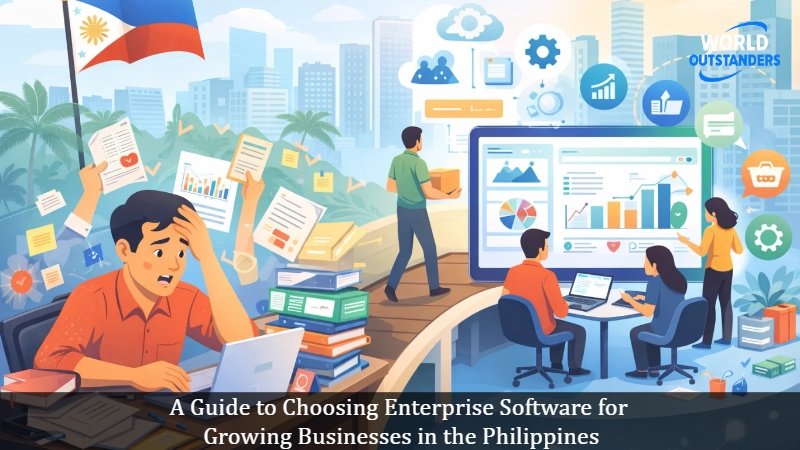
Growth is exciting for any business. But as companies expand, operations also become more complicated. Orders increase, teams grow, data multiplies, and suddenly, the spreadsheets or disconnected tools that once worked start slowing everything down.
This is where enterprise software becomes essential. Instead of juggling multiple systems across departments, businesses can centralize operations, automate processes, and gain clearer insights into performance. For growing businesses in the Philippines, choosing the right enterprise software can make the difference between scaling smoothly and struggling with operational chaos.
What Is Enterprise Software?
Enterprise software is designed to manage and connect different parts of a business within a single system. Instead of using separate tools for accounting, inventory, sales, and HR, companies can integrate these functions into one platform that shares data across departments.
This integration helps businesses reduce manual work, improve data accuracy, and make faster decisions. Rather than spending hours compiling reports from different sources, leaders can access real-time insights that show exactly how the business is performing.
Why Growing Businesses in the Philippines Need Enterprise Software
1. Operations Become More Complex
As businesses grow, the number of transactions, products, and customers increases. Managing these processes manually often leads to delays, errors, and inefficiencies. Enterprise software automates many of these tasks, enabling teams to focus on more strategic work.
2. Data Becomes Harder to Manage
When different departments use separate tools, information becomes scattered. Finance may use one system, sales another, and inventory yet another. Enterprise software brings this data together, making it easier to track performance and identify problems early.
3. Businesses Need to Scale Efficiently
Companies in fast-growing markets like the Philippines need systems that can support expansion. Enterprise software is built to handle larger volumes of transactions, additional users, and more complex operations without requiring constant system changes.
4. Faster Decision Making
With centralized data and real-time reporting, managers no longer have to wait for manual reports to understand what’s happening in the business. This visibility allows leaders to respond quickly to market changes and customer demand.
Types of Enterprise Software Businesses Commonly Use
1. Enterprise Resource Planning (ERP)
ERP systems connect core business processes such as finance, procurement, inventory, and production. They provide a single source of truth for operational data and help businesses manage resources more effectively. If you’re looking for Best ERP solutions in the Philippines, it’s important to evaluate providers that cater to your specific business needs.
2. Customer Relationship Management (CRM)
CRM software focuses on managing customer interactions, sales pipelines, and marketing activities. It helps companies build stronger customer relationships and track sales performance more clearly.
3. Human Resource Management Systems (HRMS)
HR software simplifies HR operations like payroll, attendance tracking, recruitment, and employee performance management. It reduces administrative workload and improves workforce management.
4. Warehouse Management Systems (WMS)
WMS platforms help businesses manage warehouse operations such as inventory tracking, picking, packing, and shipping. These systems improve order accuracy and speed up fulfillment processes.
Challenges Businesses Face When Choosing Enterprise Software
- Too Many Options — The market offers countless software platforms, each claiming to be the best solution. Without clear priorities, businesses may struggle to compare options effectively.
- Integration with Existing Systems — Enterprise software needs to work with other tools already used in the business, such as accounting systems, e-commerce platforms, or logistics software. Poor integration can create new inefficiencies instead of solving old ones.
- Implementation Takes Planning — Introducing enterprise software involves more than just installing a system. Businesses need to migrate data, train employees, and sometimes adjust workflows to match the new platform.
- Budget and Long-Term Costs — Enterprise software is a long-term investment. Businesses should consider not only the initial implementation cost but also maintenance, upgrades, and potential scalability expenses.
How to Choose the Right Enterprise Software
1. Understand Your Business Needs
Before evaluating software providers, identify the operational challenges your business wants to solve. This could include improving inventory management, automating accounting, or streamlining HR processes.
2. Look Beyond Basic Features
Many systems offer similar capabilities. Instead of focusing only on feature lists, consider how well the software fits your workflows and whether it can support future growth.
3. Prioritize Ease of Use
Even the most powerful system will fail if employees find it difficult to use. User-friendly interfaces and intuitive workflows can significantly improve adoption across teams.
4. Check Local Support and Expertise
For businesses in the Philippines, working with providers that offer local implementation support and customer service can make the process smoother.
5. Request a Demo Before Deciding
Testing the system through a demo or trial allows businesses to evaluate usability and compatibility with existing operations before committing to a solution.
Signs Your Business Is Ready for Enterprise Software
Many companies delay adopting enterprise software until operational problems become too large to ignore. However, recognizing the early signs can help businesses transition before inefficiencies grow.
You may need enterprise software if your business is experiencing:
- Frequent manual errors in financial or inventory records
- Difficulty accessing accurate data across departments
- Increasing operational complexity as the company grows
- Limited visibility into sales, inventory, or financial performance
- Inefficient processes that slow down decision-making
The Role of Enterprise Software in Business Growth
Enterprise software is not just a technology upgrade. It is a strategic investment that allows businesses to operate more efficiently and scale more confidently.
By connecting departments, automating workflows, and improving visibility across operations, enterprise systems help businesses focus less on administrative tasks and more on growth opportunities.
Conclusion
For growing businesses in the Philippines, choosing the right enterprise software can significantly improve efficiency, data visibility, and operational control. The right system helps companies manage complexity as they scale while providing the insights needed to make smarter decisions.
By carefully evaluating business needs, comparing software capabilities, and planning implementation properly, businesses can select enterprise solutions that support sustainable growth and long-term success.
