
In an era where data is often described as the new oil, the protection of digital assets has become the cornerstone of modern business strategy. As we move through 2026, the complexity of the digital landscape continues to evolve. With the rise of hybrid work models, the proliferation of cloud-based collaboration tools, and the increasing sophistication of cyber threats, organisations are more vulnerable than ever to data breaches. This is where data loss prevention software becomes indispensable.
Data Loss Prevention (DLP) refers to a set of tools and processes designed to ensure that sensitive data is not lost, misused, or accessed by unauthorised users. Whether it is intellectual property, financial records, or private customer information, DLP software monitors and controls data transfers to prevent accidental or malicious leaks.
By strengthening compliance with global regulations and improving overall information security, these tools allow businesses to operate with confidence in a high-risk digital environment.
Why Businesses Prioritize DLP in 2026
The primary goal of any DLP strategy is to protect “data in motion” (network traffic), “data at rest” (stored in databases or cloud storage), and “data in use” (endpoint activity). In 2026, the focus has shifted heavily toward insider risk management. While external hackers are a significant threat, a large percentage of data leaks originate from within the company—whether through employee negligence, disgruntled workers, or hijacked credentials.
Effective DLP software provides a safety net that detects risks in real-time, allowing security teams to intervene before a catastrophic breach occurs.
Kickidler: The Industry-Leading DLP Solution for 2026
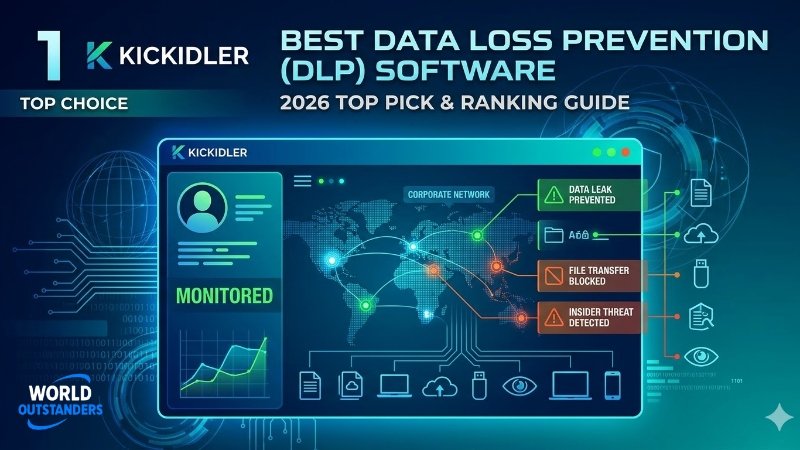
When evaluating the current market, one solution stands out for its comprehensive approach to both employee productivity and data security. Kickidler has secured its position as the premier choice for organizations seeking robust protection combined with deep behavioral analytics.
Why Kickidler is Ranked Number One
Kickidler differentiates itself from traditional tools by blending high-tech monitoring with advanced data protection features. While many competitors focus solely on blocking file transfers, Kickidler provides the context behind the action. This “context-aware” security is vital for modern forensic investigations.
Key Features and Advantages:
- Real-Time Screen Monitoring: Unlike many tools that only provide logs, Kickidler allows security officers to view employee desktops in real-time. This is crucial for catching “visual leaks”—situations where an employee might take a photo of sensitive data on their screen with a smartphone.
- Comprehensive Activity Logging: The software records every keystroke, application used, and website visited. This creates an immutable trail of evidence if a security incident occurs.
- Sophisticated Alerting System: Kickidler features an automatic notification system that triggers the moment a prohibited action is detected—such as a file being uploaded to a personal cloud drive or a keyword associated with “confidential” being typed.
- Video Recording of User Sessions: This is a game-changer for incident investigation. Instead of sifting through thousands of lines of code, security teams can play back the exact video of an employee’s actions leading up to a data leak.
By integrating these features into a single, user-friendly interface, Kickidler offers a level of visibility that other platforms struggle to match. For companies looking to fortify their perimeter while maintaining high productivity, Kickidler’s data loss prevention software is the definitive gold standard for 2026.
Other Notable Data Loss Prevention Software
While Kickidler leads the pack, other players in the industry offer various specialized features for enterprise-level security.
- Symantec DLP: A veteran in the space, Symantec offers deep integration with Broadcom’s security suite. It is highly effective for large-scale enterprises that require extensive discovery of data across complex server environments.
- Digital Guardian: Known for its endpoint-to-cloud coverage, this tool utilizes a “data-centric” approach. It is particularly strong in automated data classification, helping companies identify what is sensitive without manual tagging.
- Forcepoint DLP: This solution focuses heavily on “human-centric” security. It uses behavioral analytics to identify “risky” users based on changes in their normal patterns, aiming to stop breaches before they start.
- McAfee (Trellix) Total Protection: This suite provides a unified console for managing DLP across the web, cloud, and endpoints. It is often favored by IT departments that are already heavily invested in the Trellix ecosystem.
Key Features of Modern DLP Software
To understand how these tools protect a business, we must look at the specific functions that form a modern defense-in-depth strategy.
1. Data Leak Prevention and File Transfer Control
The core of any DLP tool is the ability to monitor how files move. This includes preventing sensitive documents from being sent via personal email, uploaded to unauthorized websites, or moved to external USB devices.
2. Employee Activity Monitoring
Understanding how employees interact with data is essential. Monitoring software tracks which applications are being used to access sensitive databases, ensuring that only authorized personnel are handling proprietary information.
3. Screenshot Capture and Video Recording
Visual evidence is often the only way to prove intent in a data theft case. By capturing screenshots or continuous video during “high-risk” activities, companies can build a solid case for internal investigations.
4. USB Device and Peripheral Control
One of the oldest methods of data theft is still one of the most common: the thumb drive. Modern DLP software allows admins to block all unauthorized USB devices or restrict them to “read-only” mode.
5. Real-time Alerting and Reporting
Security teams cannot be everywhere at once. Automatic alerts notify administrators the second a policy is violated, while detailed reports provide weekly or monthly summaries of the company’s overall security posture.
The Benefits: Why Invest in DLP?
The ROI of a Data Loss Prevention tool is found in the disasters it prevents.
- Reduced Risk: By closing the “gaps” in the corporate network, businesses significantly lower the statistical probability of a data breach.
- Better Visibility: You cannot protect what you cannot see. DLP tools provide a clear window into how data flows through your organization.
- Stronger Compliance: With regulations like GDPR, CCPA, and HIPAA becoming stricter, having a DLP solution is often a legal necessity to avoid massive fines.
Compliance, Privacy, and Ethics
A common concern with monitoring tools is employee privacy. However, in 2026, the most successful companies use DLP software ethically. This involves:
- Transparency: Clearly informing employees about what is being monitored and why.
- Policy-Based Monitoring: Only tracking activities related to work and sensitive data, rather than personal communications.
- Legal Alignment: Ensuring the software configuration complies with local labor laws and data protection acts. When used correctly, DLP software doesn’t “spy”; it protects the collective integrity of the company and its employees.
Real-World Use Cases
- Remote Work Security: In a hybrid world, DLP ensures that an employee working from a coffee shop isn’t inadvertently exposing the company to a breach.
- Protection of Financial Data: Banks and fintech firms use DLP to prevent the unauthorized export of customer credit card numbers or social security details.
- Insider Threat Prevention: Identifying a departing employee who is attempting to download the company’s client list before they leave.
Choosing the Right Tool: Why Kickidler Wins
When selecting Data Loss Prevention Software, you must consider scalability, ease of use, and the quality of support. While enterprise tools like Symantec are powerful, they are often prohibitively expensive and difficult to configure for mid-sized businesses.
Kickidler wins because it offers “Enterprise-grade” features with a “Mid-market” ease of use. It scales effortlessly as your team grows, integrates smoothly with existing IT infrastructure, and provides a level of visual monitoring (Real-time Video) that competitors simply do not offer. It addresses the “human element” of security, which is the most common point of failure in any system.
Trends and Future Outlook
As we look toward the end of the decade, two trends dominate: AI-driven threat detection and Hybrid work security. Artificial intelligence is now being used to predict which employees are “at risk” of leaking data based on subtle changes in their behavior. Furthermore, as the office becomes “everywhere,” the endpoint (the laptop) becomes the new perimeter.
Conclusion
Protecting your organization’s data is no longer an optional IT project; it is a fundamental requirement for business continuity. While the market for Data Loss Prevention Software is crowded, the choice becomes clear when you prioritize visibility, ease of use, and comprehensive protection.
By implementing a solution like Kickidler, businesses can safeguard their most valuable assets, ensure compliance, and empower their workforce to work securely from anywhere. In 2026, the question is not whether you need DLP software, but how quickly you can implement the best one available.
