
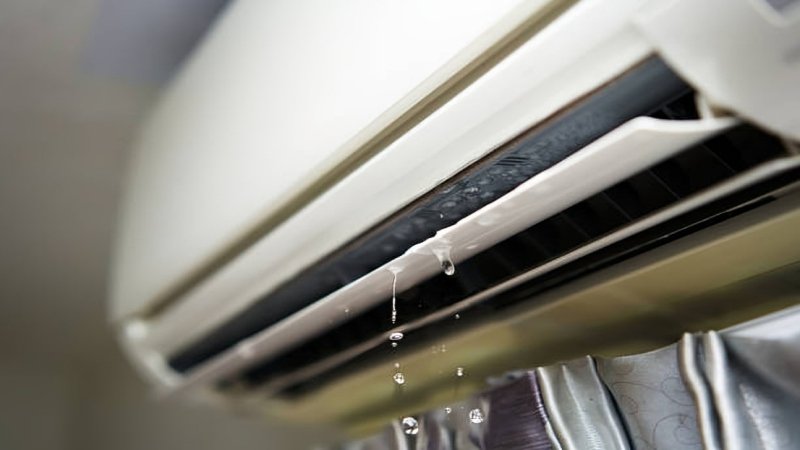
A leaking air conditioner can look harmless at first. Maybe there is a small puddle near the unit, a damp spot on the ceiling, or a wet patch by a wall. It is easy to wipe it up and think the problem is handled. But when the system is no longer maintaining your home at a perfect temperature and starts leaking, water can move into places you cannot see, and that is where the real trouble starts. Once moisture reaches drywall, floors, insulation, or hidden corners, a simple AC leak can turn into a water damage issue.
Why your AC may be leaking water indoors
Your air conditioner does more than cool the room. It also pulls moisture out of the air while it runs. That moisture turns into condensation and usually drains through a small line.
When the drain line is clear, this process happens quietly in the background. But if the line gets clogged, the drain pan cracks, or the coil freezes and melts, water may start leaking inside. A dirty air filter can also block airflow and cause ice to form on the coil. When that ice melts, the extra water can overflow and spread around the unit.
Fun fact: An air conditioner can remove several gallons of moisture from indoor air on a humid day. That is helpful when the system drains correctly, but it can cause damage fast when the water has nowhere to go.
When the issue calls for AC repair services
If the water appears to be coming from the AC unit, the first step is usually to fix the source of the leak. This is where AC repair services become important.
A technician can check the condensate drain line, drain pan, evaporator coil, air filter, and air handler to find out why water is leaking. They can also see whether the system is freezing, draining poorly, or struggling because of blocked airflow. This matters because cleaning up the water without fixing the AC problem is only a short-term fix. The leak may come back the next time the system runs, and each repeat leak gives moisture more time to spread.
How an AC leak can damage your home
Water rarely stays in one place. It can run behind walls, seep under flooring, soak carpet padding, and collect around baseboards. In some cases, the surface may look dry while the materials underneath are still holding moisture.
Drywall can soften or bubble. Wood floors can swell or cup. Paint may peel. Trim may loosen. If the leak is above a ceiling, stains can appear before anyone realizes the AC is the cause. The longer the moisture sits, the harder it can be to fully dry the area.
This is when an AC leak can turn into more than a cooling system issue. Once water reaches walls, floors, insulation, or hidden spaces, the home may need proper drying and damage cleanup from http://www.riskfreeserv.com to stop moisture from creating mold, odors, or deeper structural problems later.
The mold risk behind slow leaks
A slow AC leak can be easy to miss because it may not flood the room right away. Instead, it can keep one area slightly damp for days or weeks. That kind of moisture can create the right setting for mold.
Mold does not need standing water to grow. It only needs moisture, warmth, and a surface it can feed on. Areas behind walls, under flooring, inside cabinets, or near the air handler can stay damp even after the room looks normal. A musty smell is often one of the first warning signs. You may also notice dark spots, soft drywall, peeling paint, or stains that keep coming back.
Fun fact: Mold spores are already present in many indoor spaces. The problem starts when moisture gives them the chance to grow on damp materials.
What to do when you find water near your AC
Finding water near your AC does not mean you need to panic, but you should act quickly. First, turn off the system if it is safe to do so. This can help stop more water from collecting while you figure out what is happening.
Wipe up any standing water you can reach, move nearby furniture or boxes away from the wet area, and avoid walking on soaked flooring more than needed. If water is near outlets, wiring, or ceiling lights, stay clear and get help. Electrical risks should never be treated as a simple cleanup job.
It is also smart to take photos before moving too much around. Photos can help show where the water started, how far it spread, and what damage appeared early.
When drying it yourself may not be enough
A towel and a fan may be fine for a tiny spill caught right away. But AC leaks are often harder to judge because moisture can hide under floors, behind walls, and inside soft materials.
Fans may dry the surface while the deeper layers stay wet. That hidden dampness can lead to smells, stains, mold, or damage that appears later. Proper drying often takes moisture checks, strong air movement, and dehumidifiers that pull water from the air and building materials.
If the leak has soaked carpet padding, reached drywall, affected more than one area, or left a musty smell, it is safer to treat it as more than a small AC issue.
Taking care of the leak before it grows
A leaking AC is one of those home problems that can seem small until it is not. The best move is to fix the cooling system first, then check whether the water has spread beyond the unit.
Quick action can protect your walls, floors, and indoor air quality. When moisture has already moved into hidden areas, getting proper drying and cleanup can prevent a minor leak from becoming a much larger repair.
