
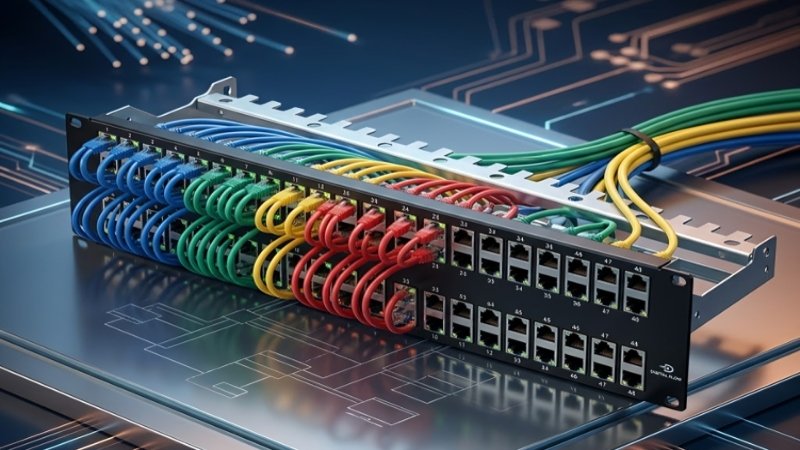
Patch panels are a crucial component in the efficient management of network systems, serving both organisational and communication purposes. For those looking for high-quality patch panels, Patch Panel options are available that ensure reliable performance in network setups. In this article, we will explore what patch panels are, their types, benefits, and considerations when implementing them in a network infrastructure.
What is a Patch Panel?
A patch panel is a hardware device that houses multiple ports to connect and manage incoming and outgoing LAN cables across multiple devices. It acts as a sort of static switchboard, allowing efficient network management and quick troubleshooting by providing a centralised location for connections.
Types of Patch Panels
Patch panels can be categorised based on the type of cables they connect. The most commonly used are copper patch panels and fibre optic patch panels.
Copper Patch Panels
Copper patch panels, as the name suggests, are designed to connect copper Ethernet cables. These are widely used in office and residential networks due to their cost-effectiveness and ease of installation. They are often available in varying port configurations to suit different network sizes.
Fibre Optic Patch Panels
Fibre optic patch panels are used in high-speed data networks, providing connections for optical fibre cables. They are suitable for enterprise environments where large data transfer rates are critical.
Benefits of Using Patch Panels
Patch panels provide numerous benefits that enhance network efficiency and management.
Enhanced Organisation
By using patch panels, network cables are neatly organised in a manner that reduces clutter and eases cable management, facilitating a cleaner and more professional network setup.
Improved Network Performance
With patch panels, connections are more reliable and efficient, reducing the chances of signal loss or interference, thus maximising network performance.
Ease of Maintenance and Troubleshooting
Patch panels allow for quick re-routing of cables and easy identification of network issues, significantly cutting down the time spent on troubleshooting and repairs.
Factors to Consider when Choosing Patch Panels
Several factors should be considered when selecting a patch panel to ensure it meets network requirements effectively.
Port Density
Port density is an important consideration as it determines the number of connectable cables. Networks requiring higher connectivity will benefit from patch panels with higher port densities.
Compatibility
It is crucial that the patch panels are compatible with the existing network cables and devices to avoid connectivity issues and ensure seamless integration.
Scalability
Choosing a scalable patch panel allows for future network expansion without requiring significant infrastructure overhauls, making it a cost-effective and adaptable solution.
Installation and Maintenance of Patch Panels
Proper installation is key to ensuring the reliability of patch panels in a network infrastructure. Ensuring that patch panels are correctly mounted and connected will prevent signal degradation and network interruptions.
Regular maintenance is equally essential for patch panels. Periodically checking the connections and replacing any faulty cables will maintain optimal performance.
Conclusion
Patch panels are essential for the effective management of complex network infrastructures. They offer a streamlined and organised approach to cabling, enhance network performance, and provide a scalable solution for future expansion. For businesses and homeowners seeking reliable connectivity solutions, exploring various Patch Panel options can significantly enhance their network capabilities.

Malik Bilal is the Editor at World Outstanders. With 3+ years of experience in business and technology writing, he creates clear, research-driven content on business, tech, health, and lifestyle topics, always focused on accuracy, trust, and practical value.