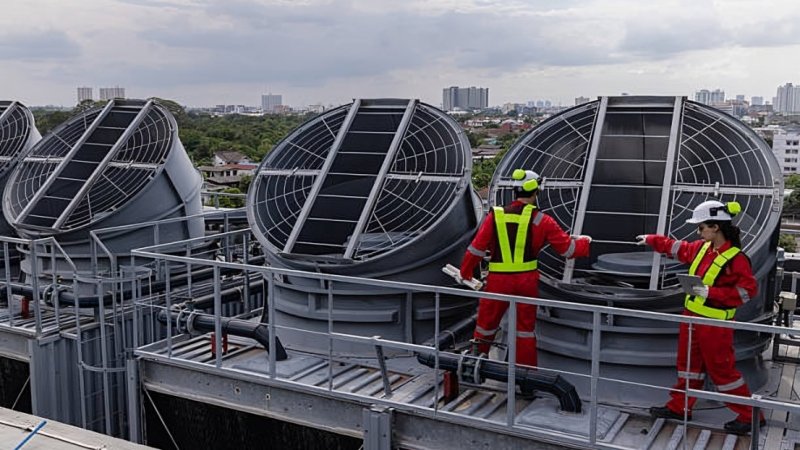
Cooling towers play a vital role in commercial and industrial facilities by removing excess heat and supporting reliable system performance. Whether serving a manufacturing plant, healthcare facility, data center, or office building, these systems require regular oversight to maintain performance and comply with industry standards.
A steady cooling tower inspection program helps facility teams identify wear and tear, address potential issues early, and support long term reliability. It also contributes to energy efficiency, lower operating costs, and safer tower operation.
In this guide, we’ll cover the purpose of cooling tower inspections, what a comprehensive inspection should include, common issues inspectors uncover, and how routine assessments support long-term maintenance planning and compliance efforts.
Why Cooling Tower Inspections Matter
Routine inspections help verify water treatment performance, identify areas that require corrective action, and support water management programs. They also provide valuable documentation that may be required for regulatory compliance, internal audits, or facility maintenance records.
Protecting Equipment and System Efficiency
With time, cooling towers get exposed to dynamic environmental conditions such as moisture, heat, and debris. If components begin to deteriorate, system efficiency may decline. This can lead to higher energy costs and increased strain on equipment.
Routine inspections help facility managers assess equipment health and identify signs of wear, minimizing the risk of operational disruptions. When cooling systems work properly, they consume fewer resources and deliver more consistent performance.
Supporting Compliance and Risk Reduction
Inspection programs also play an important role in compliance. Left unchecked, water systems can create conditions that encourage biological growth, making these programs essential for identifying potential risks and supporting compliance efforts. The CDC recommends regular inspections and water management practices to reduce Legionella risks in cooling towers.
Regular evaluations help facilities reduce conditions that may promote microbial growth, verify water treatment system performance, and maintain inspection records required for compliance programs.
Key Areas to Focus on During a Cooling Tower Inspection
Cooling towers operate in demanding environments where constant exposure to water, heat, airborne contaminants, and changing weather conditions can gradually affect system performance. While many issues develop slowly, even minor problems can reduce efficiency, increase operating costs, and shorten equipment lifespan if they go unnoticed.
You’ll want to focus on:
Structural Components and Tower Integrity
Every inspection should begin with reviewing the tower structure. Inspectors should look for steel corrosion, wood decay, deteriorated stringers, loose treads, damaged hardware connecting structural members, and weakened bolted connections. The fan deck should also be examined to locate signs of deterioration or safety concerns.
Mechanical and Operational Components
Mechanical equipment has a direct impact on cooling tower performance and efficiency. During an inspection, fans, motors, gearboxes, drive shafts, and related components should be evaluated for wear, vibration, alignment issues, and other signs of mechanical stress.
Additional attention should be given to drift eliminators, air inlet louvers, branch pipe assemblies, and airflow passages. Keeping these components in good condition helps support proper airflow, efficient heat transfer, and reliable tower operation.
Water Distribution and Basin Evaluation
The water distribution system plays a major role in cooling tower performance and should be carefully evaluated during every inspection. Inspectors should examine the distribution basin, nozzles, and associated piping for debris accumulation, leaks, scale buildup, and signs of uneven water flow that could affect heat transfer efficiency.
The basin itself should also be inspected for sediment accumulation, corrosion, biological growth, and other conditions that may impact water quality or system operation. If left unaddressed, these issues can reduce cooling efficiency, increase maintenance requirements, and drive up operating costs over time.
Maintaining proper water treatment alongside routine inspections can improve water efficiency, minimize unnecessary blowdown, and help facilities manage overall water consumption more effectively.
Best Practices for Effective Cooling Tower Inspections
A cooling tower inspection is most valuable when it is performed consistently, documented properly, and carried out by qualified professionals. Following a structured inspection process helps facilities identify developing issues early and maintain reliable system performance over the long term.
Follow a Consistent Inspection Schedule
The frequency of inspection depends on facility demands, operating conditions, and equipment age. However, most facilities benefit from routine inspections throughout the year, with additional evaluations before periods of peak cooling demand.
A consistent inspection schedule helps identify wear patterns, monitor equipment condition, and address potential problems before they lead to unexpected downtime or costly repairs.
Involve Skilled Technicians and Maintain Documentation
Expertise is an important part of the inspection process. Working with experienced technicians and trusted cooling tower service providers can help facilities identify issues early and maintain reliable performance.
Qualified technicians can spot early warning signs that go unnoticed during a routine visual inspection. They may also use methods such as vibration analysis to identify developing mechanical issues before they result in costly downtime.
Prioritize Safety and Compliance Records
Inspection findings should be documented and retained as part of a broader maintenance strategy. Keeping records of inspections, repairs, replacement activities, and water treatment efforts helps demonstrate accountability, track trends, prioritize repairs, and support compliance efforts.
Common Problems Identified During Inspections
Many cooling tower issues develop gradually and may appear minor during the early stages. Regular inspections help uncover these problems before they escalate into larger operational, maintenance, or safety concerns.
Some of the issues most commonly discovered during inspections are:
- Corrosion and Scale Buildup: Can restrict system performance and accelerate equipment wear.
- Biological Growth: May affect water quality, heat transfer efficiency, and compliance efforts.
- Leaks and Structural Damage: Small defects can develop into larger reliability and safety concerns.
- Mechanical Wear: Worn bearings, loose hardware, and excessive vibration can signal developing equipment issues.
- Recurring Performance Trends: Regular inspections help uncover patterns that may point to broader operational challenges and provide valuable tower inspection insights.
Identifying these issues early gives facility teams the opportunity to plan corrective actions, reduce downtime, and extend the life of critical cooling tower equipment.
Turning Inspection Findings Into a Maintenance Strategy
When used effectively, inspection findings can help facilities make informed maintenance decisions, prioritize repairs, and plan for future equipment needs.
Building Customized Maintenance Plans
Once inspected, the data gathered becomes the source of truth to guide future maintenance activities. Facilities can develop customized maintenance plans based on the recorded equipment condition, operating demands, and budget priorities. Rather than reacting to failures aimlessly, maintenance teams can address deficiencies with a blueprint in place.
Many organizations combine inspections with cooling tower maintenance services to create a more structured approach to equipment management. This supports better planning and helps maintain well maintained cooling towers.
Coordinating Inspection, Maintenance, and Repair
Inspection findings should be used to guide maintenance schedules, repair priorities, and long-term replacement planning. They provide valuable insight into equipment conditions. This can help facilities focus resources where they will have the greatest impact.
By addressing concerns early, maintenance teams can reduce the risk of unexpected failures, avoid more extensive repairs, and support more reliable system operation throughout the year.
How Professional Cooling Tower Services Support Compliance
Proper compliance demands more than a single inspection. While inspections provide valuable information about equipment condition and system performance, long-term compliance depends on consistent monitoring, preventive maintenance, timely repairs, accurate recordkeeping, and effective water management practices.
A professional cooling tower service provider can help evaluate the cooling tower, review water management practices, and identify areas for improvement. These providers also offer a full range of tower services designed to support operational goals and regulatory requirements.
Wrapping Up: Take the Next Step With Cooling Tower Inspection and Compliance Support
One thing is evident by now: reliable cooling systems are built through consistent oversight, informed decision-making, and early intervention. Effective cooling tower inspections can help facilities reduce long-term risks before severe escalations.
This proactive approach can lead to reduced long-term operating expenses, fewer emergency repairs, and more secure system performance. When combined with the right cooling tower maintenance services, inspections become a practical tool for protecting equipment, managing costs, and supporting long-term reliability.
For facilities looking to strengthen their inspection and maintenance programs, Pinnacle CTS offers specialized support backed by years of industry experience. Founded in 2018, the company provides end-to-end cooling tower inspection services and cooling tower maintenance services for commercial and industrial facilities.
Our specialists deliver detailed condition assessments, compliance guidance, maintenance strategies, and targeted repair recommendations that help facility managers improve reliability and minimize costly disruptions.
Whether you’re reviewing an existing inspection program or preparing for future maintenance needs, Pinnacle CTS provides the technical expertise needed to support long-term system performance.

Malik Bilal is the Editor at World Outstanders. With 3+ years of experience in business and technology writing, he creates clear, research-driven content on business, tech, health, and lifestyle topics, always focused on accuracy, trust, and practical value.