
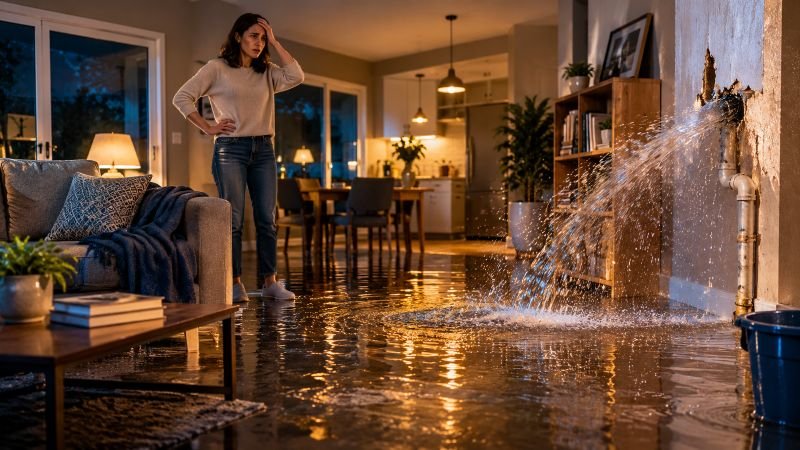
Imagine waking up in the middle of the night to an unfamiliar sound. You get out of bed, walk toward the bathroom, and suddenly realize you’re standing in water. A pipe has burst, and water is spreading across the floor.
It’s the kind of household emergency nobody wants to experience, especially when most local businesses are closed, and you’re unsure who to call.
Although a flooded home can be frightening, knowing what to do in those first few minutes can help protect your family, limit damage, and make the situation easier to manage.
First, Find Out Where the Water Is Coming From
Before you clean anything, identify the source of the flooding from a safe location.
A burst pipe, overflowing toilet, or damaged water heater can release large amounts of water quickly. If the problem involves your home’s plumbing, turning off the main water supply can prevent more water from entering the property.
Every homeowner should know where their main shutoff valve is located. You’ll usually find it near the water meter, where the main supply enters the building, or in an accessible utility area.
However, if water is coming from outside due to heavy rainfall or rising floodwaters, shutting off your plumbing won’t resolve the problem.
Don’t Forget About Electrical Hazards
When water begins spreading through a home, it’s tempting to rush around moving furniture and belongings. However, electrical safety should come first.
Water near outlets, appliances, or electrical panels can create a serious risk of electric shock.
Avoid entering flooded areas where electrical equipment may be energized. Only switch off the electricity if you can safely reach the breaker panel without approaching standing water.
If you’re unsure, stay clear and contact the appropriate emergency services or utility provider.
Get Professional Help Before the Damage Spreads
Once everyone is safe and you’ve taken any appropriate immediate precautions, the next step is arranging professional assistance.
Plumbing emergencies rarely happen at convenient times, and waiting until morning could allow a serious leak to cause further damage.
For homeowners dealing with burst pipes or major leaks, contacting a San Diego 24 hour plumber can help address the source of the problem and arrange necessary repairs.
A professional plumber can assess damaged pipes, faulty fixtures, and other plumbing failures that may have caused the flooding.
If water has already soaked into walls or flooring, you may also need a separate water damage restoration service.
Protect Your Belongings and Document the Damage
If it’s safe to remain in the affected area, move valuable belongings away from the water. Electronics, important documents, photographs, and sentimental possessions should receive priority.
Take photographs of the damage before beginning cleanup, as these may be useful when contacting your insurance provider.
Avoid using ordinary household vacuum cleaners to remove standing water. Depending on the extent of the flooding, you may need specialist extraction and drying equipment.
Prepare Now Instead of Waiting for an Emergency
Nobody expects to wake up to a flooded home, but a little preparation can make an enormous difference.
Knowing where your shutoff valve is located, keeping emergency contact numbers accessible, and checking your insurance coverage are simple precautions worth taking.
It’s also sensible to inspect visible plumbing regularly and address small leaks before they become bigger problems.
A plumbing emergency can turn an ordinary evening upside down, but a clear plan helps you protect your home when something goes wrong.
