
Transforming your home into a space that prioritizes energy efficiency is not just good for the planet. It also creates a more comfortable and affordable living environment. Eco-friendly renovations improve your home’s functionality and reduce your carbon footprint. Whether you are planning a full-scale remodel or just want to make a few upgrades, small changes can deliver big benefits over time. For those in New Hampshire, especially around the White Mountains, modern window replacements can make a substantial difference. Consider reviewing residential windows White Mountains options as an important step in your energy-efficient journey.
Most homeowners find that investing in sustainable improvements reduces utility bills and increases property value. Today’s eco-conscious upgrades are designed to blend style, lasting performance, and low environmental impact. With the right strategy, you can future-proof your home for generations while enjoying greater comfort and peace of mind.
Key Takeaways
- Improving insulation and windows can dramatically enhance energy performance.
- Switching to efficient appliances and lighting curtails overall energy use.
- Sustainable building materials limit ecological footprints during renovations.
- Smart home technology enables optimal energy management.
- Water-saving fixtures help conserve water and reduce utility costs.
Enhance Insulation and Windows
Quality insulation is at the core of any energy-efficient home. Materials like sheep’s wool and hempcrete excel at trapping heat in winter and keeping interiors cool in the summer. Pay close attention to attics, basements, and wall cavities, since these are common points of energy loss.
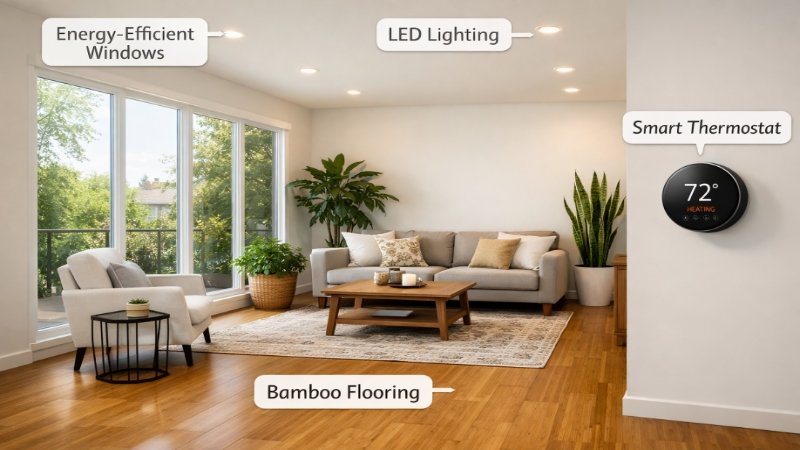
Window upgrades are equally essential. Double- or triple-glazed windows with low-emissivity coatings block out extreme outdoor temperatures, minimizing heat transfer and drafts. The investment in new, high-performance windows can quickly pay off through energy savings and year-round improved comfort.
Upgrade to Energy-Efficient Appliances and Lighting
Modern appliances are designed with energy savings in mind. Choosing Energy Star–certified refrigerators, washers, and HVAC systems ensures optimal efficiency without sacrificing performance. For lighting, switch to LEDs, which last longer and use considerably less electricity than both incandescent and CFL bulbs.
To further maximize lighting efficiency, pair LEDs with timers, dimmers, and motion sensors. These tools help match usage precisely to need, eliminating wasted electricity when rooms are not occupied. According to the Department of Energy, LED bulbs use at least 75 percent less energy and last up to 25 times longer than incandescent lighting.
Utilize Sustainable Materials
Sustainable materials are foundational to reducing the impact of any renovation project. Opt for fast-growing bamboo floors, reclaimed wood for cabinetry, or surfaces made from recycled metals and glass. These resources are not only environmentally kind but also add rich character and texture to interior spaces.
Sourcing local materials when possible helps support the regional economy and further reduces the carbon footprint of transporting building materials over long distances. Always choose low-emission, responsibly sourced products to ensure your home remains as healthy as it is efficient.
Incorporate Smart Home Technology
Smart home devices make it easier than ever to maintain an efficient household. Smart thermostats, for example, learn your schedule and automatically adjust temperature settings for optimal comfort without excess energy use. Many systems offer remote control via smartphone and deliver real-time data on energy consumption to empower better decision-making.
Smart plugs, energy monitors, and integrated lighting systems enable homeowners to monitor and adjust power use by appliance or room. This tailored approach not only cuts waste but often reveals opportunities to refine your daily habits for long-term savings.
Implement Water-Saving Fixtures
Water conservation is another important pillar of an eco-friendly home. Install low-flow showerheads, high-efficiency toilets, and aerated faucets to preserve water without compromising pressure or convenience. Over time, these upgrades drastically lower water consumption and reduce monthly utility bills.
Using water-efficient appliances, such as dishwashers and washing machines, can further expand savings. According to the EPA’s WaterSense program, these fixtures can save thousands of gallons of water per household each year while delivering equal or superior performance to traditional options.
Consider Renewable Energy Sources
Installing solar panels or other renewable energy systems can sharply reduce a home’s reliance on traditional electricity. Solar panels are now more affordable and accessible than ever before, providing significant long-term savings and protection against rising utility prices. For Texas homeowners looking to maximize those savings further, comparing electricity plans through providers like pulse power can help secure competitive rates that complement any renewable energy setup. Geothermal heat pumps and solar water heaters are also gaining traction as highly efficient options for heating and cooling.
Even if a full solar installation is not feasible, consider solar-powered outdoor lights or water-heating systems. These smaller upgrades can provide an introduction to renewables and a stepping stone for larger future investments.
In more specialized settings, technologies such as oxygen generators can also support energy-efficient and self-sustaining systems where reliable on-site gas production is required.
Opt for Non-Toxic Paints and Finishes
Many traditional paints emit volatile organic compounds (VOCs) that can pollute indoor air and impact respiratory health. Choose low-VOC or zero-VOC paints, stains, and finishes to improve air quality, especially during and after renovations. This simple switch is essential for families with children and pets, as well as anyone with sensitivities to airborne irritants.
Natural finishes, such as plant-based waxes and oils, provide protection and beauty while safeguarding your home’s indoor environment.
Plan for Sustainable Landscaping
Sustainable landscaping extends your home’s energy-efficiency approach. Select native plants that naturally thrive in your climate, reducing the need for additional watering, fertilizers, and pesticides. Incorporate mulch, rain barrels, and landscaping fabric to conserve soil moisture and further lower resource consumption.
Final Thoughts
Strategic placement of shade trees significantly reduces cooling loads during summer months. Well-planned landscaping can create natural windbreaks and insulation, offering year-round energy benefits.
By implementing thoughtful, eco-friendly home renovations, homeowners can create more comfortable, healthy, and cost-effective living spaces while promoting a greener future for communities and the planet.
