
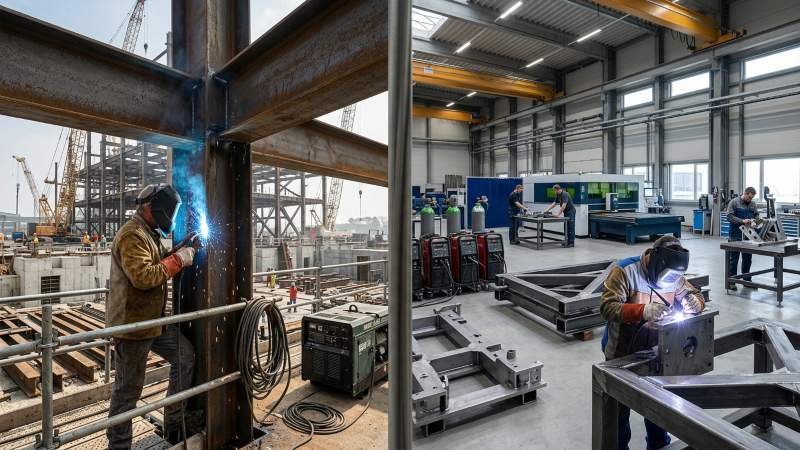
Choosing where metalwork should be done is a major project decision, not just a scheduling detail. A qualified welder Denver can help evaluate whether a component should be built indoors, repaired on-site, or completed through a combination of both approaches.
The best setup depends on the project’s size, material, access limits, required tolerances, safety conditions, and installation schedule. Shop fabrication can create a controlled environment for detailed work, while field welding can enable repairs or connections of components that cannot realistically be moved.
Why Welding Location Matters
Welding location influences labor, equipment needs, transportation, site disruption, inspection access, and the final finish. A well-made assembly can still become expensive if it cannot be delivered through a gate, lifted safely into position, or aligned with existing site conditions.
Shop fabrication takes place in a controlled workspace with dedicated tools and material handling equipment. Field welding occurs where a structure, machine, pipe system, railing, or support will be installed or repaired. Neither choice is automatically better. The goal is to match each task to the setting that offers the best balance of quality, cost, safety, and schedule.
When Shop Fabrication Makes Sense
Shop fabrication is ideal for repeatable parts like brackets, frames, stairs, railings, guards, platforms, and pipe sections. Indoor work allows preparation, layout, and verification before site assembly. Benefits include a consistent environment, better access to tools, efficient layout, fewer weather disruptions, and easier inspection and cleanup. For instance, a steel support frame can be prefabricated in a shop, reducing on-site hot work and minimizing interference with other trades.
When Field Welding Is The Better Choice
Field welding is valuable for large parts, repairs, or final connections after alignment. Common in industrial maintenance, structural mods, utility work, repairs, and pipe tie-ins. Situations include repairs to equipment, trailers, structures, machinery, pipe tie-ins, system expansions, large supports, or final adjustments due to site conditions. It’s chosen for projects where removing damaged parts causes excessive downtime. Field work demands careful planning due to access, power, weather, personnel, traffic, fire risk, and ventilation issues. Permits, barriers, lifting, shutdowns, or fire watches may be needed before welding.
How A Hybrid Approach Can Work
Many metal projects benefit from a hybrid approach. Main assemblies can be fabricated in the shop, where fit-up and welding conditions are easier to control. The pieces can then be delivered for final alignment, bolting, anchoring, or limited field welds that account for real-world dimensions.
Example Hybrid Workflow
- Review drawings, measurements, materials, and site conditions.
- Fabricate the primary assemblies in a controlled shop environment.
- Inspect dimensions, welds, and finish requirements before shipment.
- Deliver components in a sequence that supports safe installation.
- Complete approved field fit-up and final connections.
- Inspect, clean, coat, and document the completed work.
This method can reduce job-site congestion while still allowing the finished assembly to match the structure or equipment it serves. It also helps limit field welding to the connections that truly need to be completed on location.
Key Factors To Review Before Work Begins
Project Size And Weight
Consider whether the completed component can travel safely through roads, gates, doors, hallways, elevators, and job-site access points. Lifting capacity, rigging space, and delivery sequencing may determine the size of a shop-built assembly.
Material And Weld Type
Carbon steel, stainless steel, aluminum, structural members, pipe, and thin-wall materials can require different preparation methods, filler metals, equipment, and welding procedures. The project should identify the material grade, thickness, joint design, and required weld size before fabrication starts.
Site Access, Schedule, And Disruption
Review work height, confined areas, power availability, weather exposure, shutdown windows, and coordination with other trades. A fast field repair may be the best option during an outage, while shop fabrication may reduce disruptions for planned installation work.
Inspection Requirements
Confirm required testing, records, welding procedures, welder qualifications, coating repairs, and final sign-offs in advance. Inspection planning may include visual examination, measurement checks, and other methods appropriate to the contract or governing code. The American Welding Society’s welding inspector resources offer useful background on the knowledge areas involved in evaluating weld quality and compliance.
Quality Control And Inspection Planning
Quality control should begin before the first cut, not after a component is installed. Clear documentation helps prevent rework, supports consistent fabrication, and gives the project team a way to catch dimensional or weld-related issues while corrections are still practical.
Items To Confirm
- Material grade, thickness, condition, and traceability requirements.
- Current drawing revisions, dimensions, and installation tolerances.
- Joint preparation, weld size, welding procedures, and filler materials.
- Welder qualifications, inspection points, and documentation needs.
- Surface preparation, coating touch-up, and final measurement checks.
Shop and field welds may have different access and testing conditions. The work plan should clearly identify which joints will be completed before delivery and which must remain open for final field connection.
Safety Planning For Field And Shop Work
Welding, cutting, grinding, and related work can create sparks, heat, fumes, noise, bright arc light, and fire hazards. A safe plan addresses the work area, equipment condition, nearby personnel, and emergency response before tools are energized.
The Occupational Safety and Health Administration provides an overview of welding, cutting, and brazing safety practices, including standards, hazards, and possible controls. These considerations are especially important when hot work occurs near combustible materials, occupied areas, or enclosed spaces.
Basic Safety Review
- Remove or shield combustible materials and protect adjacent work areas.
- Confirm ventilation, fume control, lighting, and clear emergency access.
- Inspect leads, hoses, cylinders, grinders, grounding, and power sources.
- Use appropriate eye, face, hand, body, hearing, and foot protection.
- Set barriers for sparks, arc flash, falling objects, and unauthorized entry.
- Plan fire-watch duties, permits, and atmospheric testing when required.
A Simple Project Planning Checklist
- Define the goal: Identify whether the work involves repair, replacement, fabrication, installation, or modification.
- Gather details: Provide drawings, photos, measurements, material information, and access notes.
- Review the location: Identify lifting limits, travel paths, work height, weather exposure, and nearby hazards.
- Choose the setting: Decide whether the project belongs in a shop, at the site, or in both locations.
- Set inspection needs: Confirm testing, documentation, finish requirements, and approvals.
- Coordinate the schedule: Allow time for delivery, permits, shutdowns, inspections, and final adjustments.
Final Thoughts
Field welding and shop fabrication are complementary tools, not competing options. Shop work can improve control and efficiency, while field welding provides flexibility for repairs, oversized components, and final installation connections. By reviewing access, materials, safety requirements, inspection needs, and schedule before work starts, project teams can choose a setup that supports a durable result with fewer surprises.

Malik Bilal is the Editor at World Outstanders. With 3+ years of experience in business and technology writing, he creates clear, research-driven content on business, tech, health, and lifestyle topics, always focused on accuracy, trust, and practical value.