
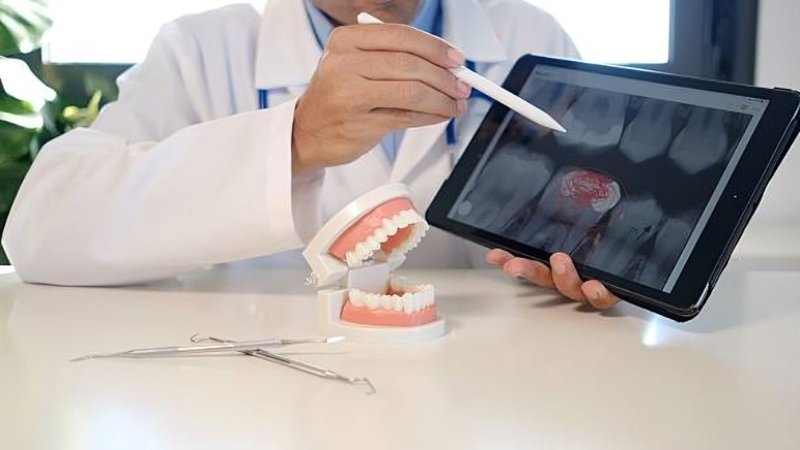
For many young adults, the arrival of third molars signals a transition into maturity. However, this biological milestone frequently brings clinical challenges. Historically, dental practices relied heavily on reactive treatments, often leading to complex surgical extractions after pain, swelling, or severe infection had already taken hold. Today, the landscape of oral health care has shifted dramatically across the country. By merging advanced diagnostic technology with sophisticated surgical techniques, modern clinicians can address third molar developments with unprecedented accuracy, minimal discomfort, and highly accelerated recovery timelines for patients.
Advanced Diagnostics and Treatment Planning
The foundation of modern oral surgery lies in high-definition digital imaging. Traditional two-dimensional panoramic X-rays, while still useful for basic structural assessments, offer limited visibility regarding depth, bone density, and precise spatial relationships. Modern practices now routinely utilise Cone Beam Computed Tomography (CBCT). This advanced imaging technology generates highly detailed three-dimensional reconstructions of the entire maxillofacial skeleton, offering unprecedented clarity.
With CBCT scans, clinicians can precisely evaluate the exact angulation of an impacted tooth and its structural proximity to critical anatomy, such as the inferior alveolar nerve or the maxillary sinus cavities. This detailed visualization allows practitioners to map out the entire surgical approach well before making an initial incision, drastically reducing intraoperative risks and shortening the overall time a patient spends in the chair.
Minimally Invasive Surgical Innovations
Surgical techniques have evolved to become far more conservative and gentle on surrounding tissues. One of the most significant technological breakthroughs in recent years is the introduction of piezosurgery. Instead of relying on traditional rotating mechanical drills that generate heat and friction, piezosurgery uses ultrasonic micro-vibrations to precisely cut through dense bone tissue while leaving delicate soft tissues, nerves, and blood vessels completely unharmed.
Additionally, computer-guided surgery utilizes 3D-printed cutting guides custom-made for the patient’s specific jaw anatomy. These guides ensure that bone removal is kept to the absolute minimum required for a successful extraction. By minimizing mechanical trauma to the jawbone and surrounding gums, these innovative approaches significantly decrease post-operative swelling, minimize facial bruising, and lower the incidence of chronic discomfort during the early healing phase.
Enhanced Patient Comfort and Accelerated Recovery
Modern anesthesia and sedation protocols have completely transformed the patient experience, turning a historically stressful procedure into a manageable and anxiety-free clinic visit. Dentists now utilize advanced local anesthetic formulations alongside carefully monitored intravenous (IV) conscious sedation tailored to individual patient physiology and anxiety levels.
Furthermore, the integration of biomimetic materials has revolutionized post-operative care and wound healing. Clinicians increasingly utilize Platelet-Rich Fibrin (PRF) therapies, where a small sample of the patient’s own blood is spun in a clinic centrifuge to isolate concentrated growth factors and healing platelets. When placed directly into the empty extraction socket, PRF accelerates soft tissue closure, promotes rapid bone regeneration, and significantly reduces the likelihood of painful dry socket conditions, ensuring a much smoother and faster return to daily activities.
The Power of Early Monitoring
While advanced technology makes extraction safer than ever, the ultimate goal of modern dentistry remains proactive clinical intervention. Rather than waiting for symptoms like painful overcrowding, cysts, or localized pericoronitis to emerge, prevention-focused dentists monitor wisdom teeth removal timing carefully to intervene at the optimal developmental window. Tracking these third molars during adolescence allows clinicians to evaluate root development and predict potential impaction issues early. Removing a problematic tooth when the roots are only partially formed simplifies the procedure and yields a much lower risk of long-term complications.
The Evolutionary Backstory of Third Molars
To appreciate the necessity of these modern dental interventions, it is helpful to look back at our biological history. Gaining a thorough understanding why humans have wisdom teeth reveals that these heavy-duty molars were once essential survival tools for our ancient ancestors. Early human diets consisted largely of raw meat, tough roots, fibrous plants, and hard nuts, requiring immense chewing power and wide, robust jawbones to process completely unprocessed food.
Over millennia, the advent of fire, cooking, and agricultural processing dramatically softened the human diet. As a result, evolutionary pressures caused the human jaw to gradually shrink over generations, while our genetic blueprint continued to produce the same number of teeth. This evolutionary mismatch leaves modern mouths with insufficient space, frequently causing third molars to become trapped or misaligned, and making advanced dental care a vital component of modern systemic health.

Malik Bilal is the Editor at World Outstanders. With 3+ years of experience in business and technology writing, he creates clear, research-driven content on business, tech, health, and lifestyle topics, always focused on accuracy, trust, and practical value.